Having lived in the Chamonix valley for two decades, we’ve often been asked about our thoughts on global warming and the impact it has had on skiing, particularly in Chamonix. Instead of just sharing our personal observations, we’ve decided to compile trusted research to cross-check against our anecdotal experiences.



Global Warming and Its Impact on Skiing


Global Warming And Its Impact On Skiing in Chamonix

Is Global Warming A Real Thing
If you’re reading this article, you may have concerns about global warming, especially regarding the Alps, snowboarding, skiing, and the ski industry. Are these concerns valid and supported by evidence? This is a question we’ve frequently contemplated, particularly over the past twenty years.
Our instinctive response tends to be affirmative; however, heuristics can sometimes misinterpret our understanding of past trends. The twenty-year timeframe we can reflect upon is relatively short, and while we might perceive significant changes, such as rising snow lines, higher alpine tree lines, glacier retreat, and warmer summers, data-driven insights can provide a clearer picture. One credible resource is the CREA (Research Centre for Alpine Ecosystems), which has been analyzing data since 1996, pulling from records dating back to the 1950s. Their findings correspond with our observations, reporting a rising snow line and decreased precipitation in the Alps. They estimate that Chamonix Mont-Blanc has lost approximately one month’s worth of snow over the last four decades. Alarmingly, without significant intervention, they suggest that the Alps could lose the same amount of snow again, but in just the next 25 years.
Rising Temperatures In Ski Resorts and Less Snowfall
The paper “Impacts of Climate Change on the Ski Industry” (Gilabert-Burdalo, M. et al, 2014) highlights ongoing trends of rising temperatures and reduced natural snowfall. Furthermore, while global temperatures have risen by about 1.5°C, the Alps have experienced a concerning increase of nearly 2°C (Beniston et al., 2018). As identified earlier, Gilabert-Burdalo et al highlight that current trends are leading to shorter ski seasons and, in some resorts, compromising snow reliability, resulting in economic repercussions such as decreased revenues from lift tickets and tourism. That the ski industry is, and will need to continue to evaluate and act on potential adaptation strategies, including investing in snowmaking technology and diversifying activities to enhance sustainability, emphasising that various measures must be coordinated depending on specific regional impacts.
Glacier Retreating as Forests and Green Pastures Rise Higher
Chamonix itself has some of Europe’s most spectacular glaciers, yet the retreat we have seen physically of these glaciers has been significant. Over the past two decades, glaciers that were once close to the valley floor are now found hundreds of metres higher. A walk from the top of Montenvers to the Mer de Glace reveals informative placards placed by the municipal illustrating the scale of this retreat over various years. Longer-term comparisons of Chamonix glaciers by Dr Kieran Baxter and Dr Alice Watterson from the University of Dundee (2019), employing monoplotting techniques, compares historical photographs from Walter Mittelholzer in 1919 against the same geo located photographs in 2019 demonstrate how significant changes over the last 100 years.
Local ecologists have also reported that tree lines in the Chamonix Valley are rising on average by three metres (9 feet) annually. While this may seem minimal on an annual basis, over a decade, this equates to a height increase of more than most Chamonix chalets (2m higher than the typical 8m roof height). Similarly, local fauna such as rabbits, foxes, chamois, and deer are moving upward in elevation by an estimated 10 meters per year, totalling 100 meters per decade (source CREA). This equates to a gain in height of a circa 30 floors skyscraper in just ten years.
Global Warming and The Next Steps For The Ski Industry
The issue of global warming presents a complex challenge and dilemmas for the ski industry. Artificial snowmaking is a case in point. While many ski resorts have invested in extensive snow-making equipment, this technology is only effective at temperatures -3°C and below (-3°C to -10°C). Some recent snow-making technological innovations are aiming to operate closer to freezing levels, but currently the -3°C operational minimum remains the common maximum operating temperature which is problematic for certain resorts where the thaw line has shifted over the decades. Where once in dry periods -3°C may have been common on their valley floor (e.g. clear sky nights), this in many lower resorts is now rarer. This is because typically, for every 100m of height gain, the temperatures on average drops 0.6°C, which means for every centigrade increase in temperature, the thaw, optimum snow making line, and snow-line shift upwards of circa 165m relative to their previous height. Furthermore, snow-making machines that seek to off-set the impact of global warming on snow yeild are highly energy-intensive, and negative contributor to the resorts carbon footprint.In simple terms, while snow-making helps keep some lower slopes and resorts operating, it contributes to global warming with the energy needed to operate them. This said, many ski resorts seek to carbon off-set, but the water and energy needed to feed such equipment is significant and the effectiveness of the off-setting is sometimes debated. Machines energy consumption varies, but Aigner et al estimated that 3,501 m³ of water per hectare of slopes with the energy requirement for snowmaking is 281 GWh. This corresponds to 5.3 kWh per skier visit or 22,449 kWh per hectare of slopes equipped with snow makers (Aigner, G. et Al. 2024).

Alpine Resorts Are Shifting To Summer Activities
Karolina Korsan-Kumińska’s paper, “Assessing the Impact of Global Warming on the Sport, Tourism, and Recreation Industries in Western Norway,” highlights the potential consequences of rising temperatures and shifting weather patterns on outdoor activities and the tourism economy. She suggests an increased focus on summer tourism opportunities as both a necessity and an opportunity for the region. Her study emphasizes the importance of adaptive strategies to mitigate negative impacts while capitalizing on potential benefits for sustainable development in the sport and recreation sectors. A notable example of this adaptive approach is seen in the Portes du Soleil region, specifically in Les Gets. Recognizing the threats posed by global warming to the ski industry, particularly in low-lying ski areas, the local Portes du Soleil stakeholders made significant investments in summer activities. Mountain biking, for instance, has become a standout offering, along with initiatives like the Parc Aquatic. As a result, the aforementioned recreation, mountain biking, Les Gets has emerged as premier alpine mountain biking destination in Europe.
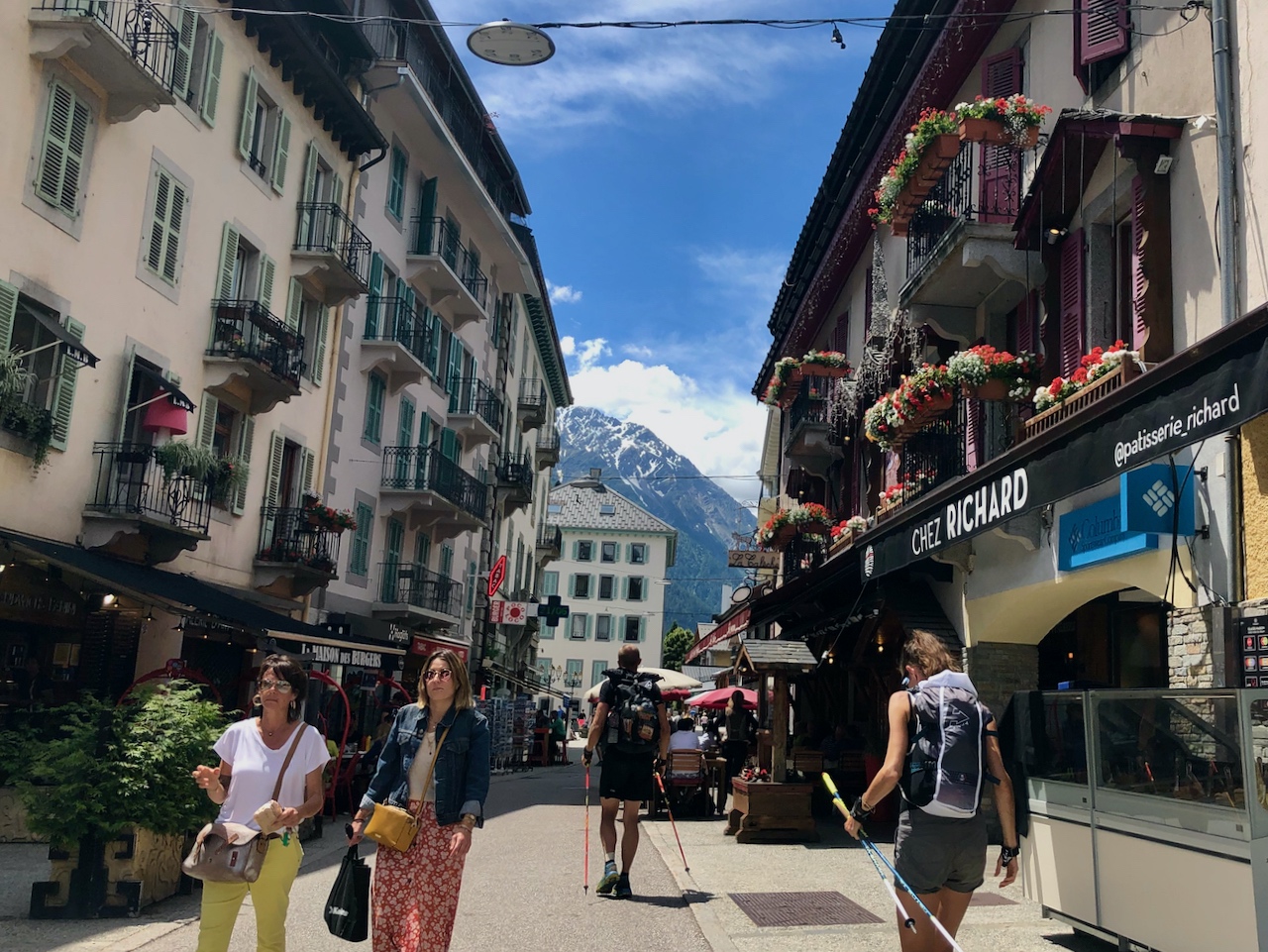
In contrast, Chamonix, despite its vibrant summer tourist industry and its historic charm under Mont-Blanc, initially reacted more slowly to the challenges posed by climate change, possibly due to a degree of complacency. Although it boasts high-altitude skiing and a strong summer market, Chamonix now finds itself playing catch-up in marketing broader summer activities alongside its traditional skiing, snowboarding, hiking, and climbing offerings. Other resorts, with the exception of Zermatt, which, like Chamonix, has benefited from a strong summer tourism draw in the Matterhorn, particular southern, low lying ski areas that can not access high-altitude skiing, are either facing extinction or racing with great urgency to adapt and enhance their holiday experience.
It is not just in Chamonix and the alps, worldwide ski resorts are increasingly having to diversify their offerings to adapt to changing market demands and climate conditions. Economic diversification in winter tourism is becoming crucial to survival as resorts have to expand beyond traditional winter sports to include summer activities, wellness tourism, and cultural experiences (Hall & Higham, 2005). This said, this shift is not necessarily negative, as it enhances visitor experiences while also contributing to the sustainability of local economies, as evidenced by successful case studies demonstrating how resorts that embrace diversified business models can thrive despite environmental challenges (Stinson, 2011). The impact of climate change propelling ski resorts to rethink their strategies. With decreasing snowfall, many resorts are developing year-round attractions and services to maintain viability and attract a broader audience (Williams & Mendelsohn, 2019). This diversification ultimately plays a significant role in enhancing visitor satisfaction and loyalty, underscoring the importance of adapting to the evolving landscape of winter tourism (Backman & Backman, 2004). This is something we have seen increase significantly in the last twenty years. Clients that might have booked just one week in the winter, are now visiting two, three, sometimes more per year. Whether climbing Mont-Blanc, walking holidays with friends, cycling weeks and weekends in the summer and autumn, or just taking breaks to enjoy the views and restaurants from Chamonix’s beautiful town centre.
Global Warming and the Impact on Chamonix and Its Ski Holiday
In conclusion, global warming is undeniably affecting the Chamonix Valley and the wider, global ski industry. Rising temperatures, decreased snowfall, and glacier retreat have transformed the landscape and ecology of the Alps and worldwide high altitude landscapes. Across the world the trend of shorter ski seasons and the economic challenges faced by resorts are likely to continue unless significant action is taken to combat global warming. As awareness of this issue increases, the ski industry must adapt through innovative strategies. While these may include the development of improved snowmaking technologies that have a lower carbon impact and operate effectively at higher temperatures, diversifying winter activities and expanding summer tourism is going to be critical for many resorts economic survival.
While the global warming situation is concerning, it also presents an opportunity for the industry and local communities to extend its offering, in terms of activities and seasons, as well as engage in sustainable practices that can mitigate some of the adverse effects of climate change and help preserve this beautiful region for future generations. Educating visitors and staff about sustainability, participating in carbon offset projects, and promoting eco-friendly transportation options for example are essential to minimising the carbon footprint of ski resorts. By implementing these strategies, ski resorts can help preserve their longer-term viability while protecting surrounding ecosystems and appealing to environmentally conscious tourists.
The above said, it is our individual efforts, encouraging and supporting regional, and national efforts too that will make the difference, whether it is reducing our carbon footprint (energy, transportation et al), encouraging others to do so, recycling, avoid unnecessary waste, etc. etc. Thank-you for your efforts to date, but please try and do a little bit more – your ski resort needs you!
References:
- Aigner, G., Steiger, R., & Mayer, M. (2024). Snowmaking in Austria: Energy consumption, water turnover, CO2 emissions. Current Issues in Sport Science (CISS), 9(4), 028–028. https://doi.org/10.36950/2024.4ciss028
- Matiu, M., Crespi, A., Bertoldi, G., Carmagnola, C. M., Marty, C., Morin, S., Schöner, W., Cat Berro, D., Chiogna, G., De Gregorio, L., Kotlarski, S., Majone, B., Resch, G., Terzago, S., Valt, M., Beozzo, W., Cianfarra, P., Gouttevin, I., Marcolini, G., & Notarnicola, C. (2021). Observed snow depth trends in the European Alps: 1971 to 2019. The Cryosphere, 15(3), 1343–1382. https://doi.org/10.5194/tc-15-1343-2021
- Gilaberte-Búrdalo, M., López-Martín, F., Pino-Otín, M. R., & López-Moreno, J. I. (2014). Impacts of Climate Change on Ski Industry. Environmental Science & Policy, 44, 51–61. https://doi.org/10.1016/j.envsci.2014.07.003
- Hall, C. M., & Higham, J. (2005). Tourism, Recreation and Climate Change. In The Impact of Climate Change on Tourism* (pp. 29-43). Newcastle: Cambridge Scholars Publishing.
- Korsan-Kuminska, K. (2016). Assessing the impact of global warming on the sport, tourism, and recreation industries in western Norway. Studia Ecologiae et Bioethicae, 14(3), 143–168. https://www.ceeol.com/search/article-detail?id=713448
- Research Center for Alpine Ecosystems | CREA Mont-Blanc. (n.d.). Creamontblanc.org. https://creamontblanc.org/en/
- Stinson, J. (2011). Sustainable tourism development in the face of climate change: a case study analysis. International Journal of Tourism Research, 13(1), 25-37.
- Williams, A. P., & Mendelsohn, R. (2019). Climate Adaptation Strategies in Mountain Resorts: The Future of Skiing. Climate Policy, 19(5), 641-652.
- Wiskulski, T. (2024). The impact of tourist experience and satisfaction on revisit intention on the example of Polish tourists in Croatia. Acta Scientiarum Polonorum Administratio Locorum. 23. 331-342. 10.31648/aspal.8801.
Contact Us:

Connect With Us